What Is the Zohar?
A simple explanation of the central book of Kabbalah.
By [OWNER: author name]Last reviewed:
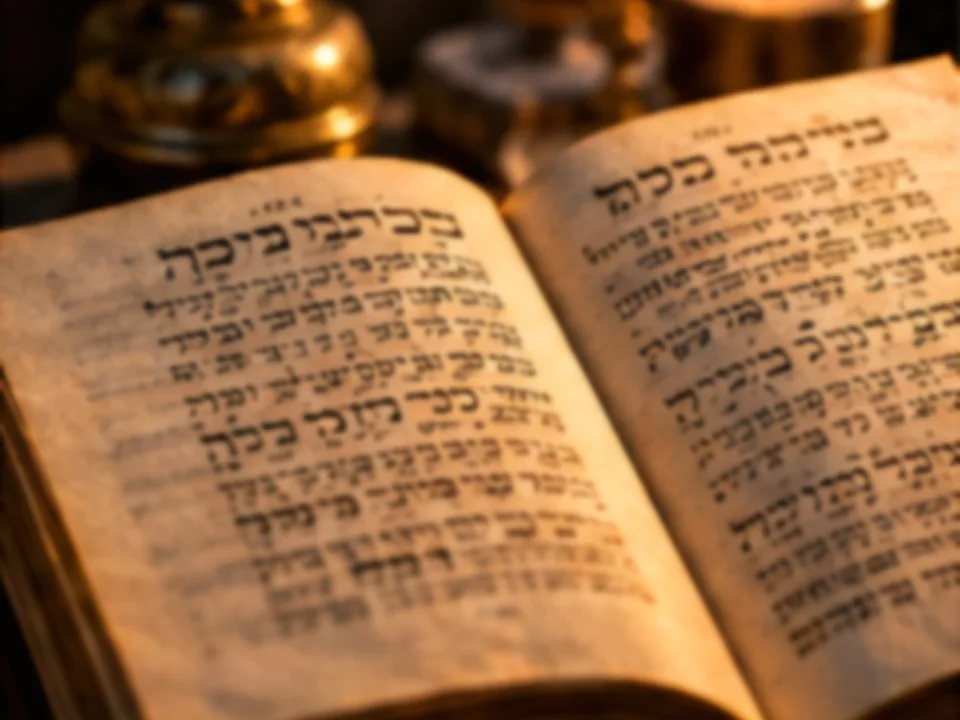
The Zohar is the central text of Kabbalah. Its name means radiance or splendor. It is a large collection of mystical commentary on the Torah, written mostly in Aramaic, and it became widely known in thirteenth century Spain. Tradition links it to Rabbi Shimon bar Yochai, while many historians credit Moses de León.
The Zohar is the central text of Kabbalah. Its name means radiance, or splendor. It is a large, old collection of writing, mostly in the form of commentary on the Hebrew Bible, written mostly in Aramaic, an ancient language closely related to Hebrew.
Where did the Zohar come from?
Tradition credits Rabbi Shimon bar Yochai, a teacher of the second century, while most academic historians place the text's appearance in Spain in the late thirteenth century.
Tradition connects the Zohar to Rabbi Shimon bar Yochai, a teacher who lived roughly two thousand years ago, and to the years he is said to have spent hiding in a cave, covered in more depth in another article on this site. The text as we have it today became widely known starting in the thirteenth century, through a scholar named Moses de León, and its exact origins remain a subject of ongoing study and discussion among historians.
Both views matter to readers. The traditional view treats the Zohar as ancient teaching passed down through generations. The scholarly view treats it as a medieval work that gathered older ideas and may have been written largely by Moses de León. You do not need to settle that question to learn from the ideas. The story of Rabbi Shimon's cave shows how tradition tells the origin.
What language is the Zohar written in?
The Zohar is written mostly in Aramaic, with some Hebrew.
Aramaic was a common language across the ancient Near East and is closely related to Hebrew. The Zohar uses a special literary Aramaic, which is one reason it is hard to read even for people who know Hebrew. Most readers use a translation or a guide.
What is the Zohar about?
The Zohar is a mystical commentary on the Torah that looks for the hidden meaning behind the words of the text.
Unlike a book with one clear story from beginning to end, the Zohar is organized loosely around the weekly Torah portions read in Jewish tradition. It moves between story, conversation, and deep symbolic explanation, often within the same page.
It asks questions such as: how does something infinite become something we can know? What is a person for? Why do good things and hard things both happen? Its answers use images such as Ein Sof, the word for the infinite source, and the ten sefirot, the ten qualities through which the infinite is described.
What makes the Zohar different from a simple religious text is its focus. It is less concerned with rules and rituals, and more concerned with the hidden structure behind everyday reality, the relationship between the visible world and the deeper forces shaping it. This is part of why its ideas, translated into plain language, can feel useful even to someone with no religious background at all.
How is the Zohar organized?
It follows the weekly readings of the Torah, with long side trips along the way.
In Jewish tradition the Torah is read in weekly portions, and the Zohar comments on verses from those portions. It also includes separate sections of its own, such as the Idra Rabba, or Great Assembly, which describes a gathering of Rabbi Shimon and his students. Because of this, there is no single page one that starts a story. You can enter almost anywhere, which is why a guided portion is a good way in.
Is the Zohar one book or many?
It is a collection of writings, usually printed in several volumes.
Related works, such as the Tikkunei Zohar and the Zohar Chadash, are often printed with or alongside it, which adds to the sense that it is a whole library. When people say the Zohar, they usually mean the main commentary on the Torah.
What does the Zohar say about everyday life?
It treats ordinary life as the place where deep ideas are tested.
The Zohar is full of teachers who walk together on the road, share meals, and talk as they travel. A walk becomes a lesson, and a simple question opens a long teaching. The idea behind this is that the hidden structure of reality shows itself in small moments: how a person speaks, gives, waits, and responds. That is why the Zohar can be read as a book about life, not only about heaven.
What are the main ideas in the Zohar?
A few ideas return again and again.
One is that the Torah has layers, and that the surface story hides a deeper one. Another is that the infinite becomes knowable through ten qualities, the sefirot. Another is that human action matters, because what a person does below affects the whole structure. And another is that love and awe are two sides of one relationship with the source of life. You do not have to accept these as doctrine to find them useful as a way of paying attention.
Does the Zohar predict the future?
Not as its main purpose.
The Zohar is not a book of predictions. It is a book of interpretation, and its interest is in meaning, not forecasting. People who promise to read your future from it are adding something the text does not claim.
Is the Zohar a sacred book, and who reads it?
Many Jewish communities treat the Zohar as a sacred text, and it is also read by students of mysticism from many backgrounds.
In Jewish life it has been studied for centuries, often alongside the Bible and the Talmud. Some people read it as devotion, some as philosophy, and some as literature. In the twentieth century it was translated into English and other languages, which opened it to a much wider audience. Several English translations exist. This site paraphrases rather than quotes modern translations, so you will find explanations here, not copied passages.
How do I start reading the Zohar?
Start with a short guided portion, not the whole book.
Reading the Zohar directly can be difficult, even for experienced readers, because it jumps between ideas rather than following one straight story. This section of the site exists to make small portions of it more approachable, explaining the ideas in plain, modern language, while pointing back to the real source material rather than replacing it.
Begin with an explanation of one passage, then read what interests you. On this site, three good first choices are the first word of Genesis, the Idra Rabba, and the ten sefirot. Read slowly. Expect to be confused at times. Ask what a passage is trying to make you notice, not what it predicts.
How is the Zohar different from the rest of Kabbalah?
The Zohar is the best-known text of Kabbalah, but it is not the only one.
Earlier works, such as the Sefer Yetzirah, or Book of Formation, shaped the tradition. Later teachers, such as Rabbi Isaac Luria, known as the Ari, who lived in sixteenth century Safed, added new systems of ideas. Many modern teachers read the Zohar through the Ari's ideas. This site keeps to plain language for the core ideas and links to each source as it goes. The glossary defines the terms.
What should I read after this?
A good next step after this article is to read one of the specific Zohar portions covered on this site, such as the story of Rabbi Shimon's cave or the discussion of the first word of Genesis, both written as a gentle introduction to how the text actually thinks.
If you are new to all of this, Kabbalah for Beginners: Where to Start is a gentle first step. For the bigger picture, read What Is Kabbalah?. And if you are wondering whether you need to be religious to read the Zohar, Is Kabbalah a Religion? answers that directly.
Quick answers before you go deeper.
What does Zohar mean?
Zohar is a Hebrew word that means radiance or splendor.
Who wrote the Zohar?
Tradition credits Rabbi Shimon bar Yochai, who lived in the second century. Historians place the text's appearance in thirteenth century Spain, and many credit Moses de León. You do not need to settle the question to learn from the ideas.
What language is the Zohar written in?
Mostly Aramaic, with some Hebrew. Most readers use a translation or a plain-English guide.
Do I need to be Jewish to read the Zohar?
No. It is a Jewish text, and people from many backgrounds read it. Reading with respect and starting with guided explanations is a good approach.
Keep reading.
Kabbalah for Beginners, A Simple Starting Point
New to Kabbalah? Here is the simplest possible starting point.
What Is Gematria? Hebrew Letters as Numbers, Explained Simply
Every Hebrew letter carries a number. Gematria is the old practice of reading meaning in that overlap. Here is what it actually is, and what it is not.
Light and Vessel
Why having more stuff never feels like enough. What a "vessel" means for your life.
New to Kabbalah and curious how it applies to you?
The Tikkun Quiz needs no background. In about 3 minutes it names one pattern and one step.
Take the quizYour repeating patterns may be trying to teach you something.
Explore a practical Kabbalah approach to purpose: notice what keeps returning, understand the growth it asks of you, and choose one different response today.